
In italiano su Artribune
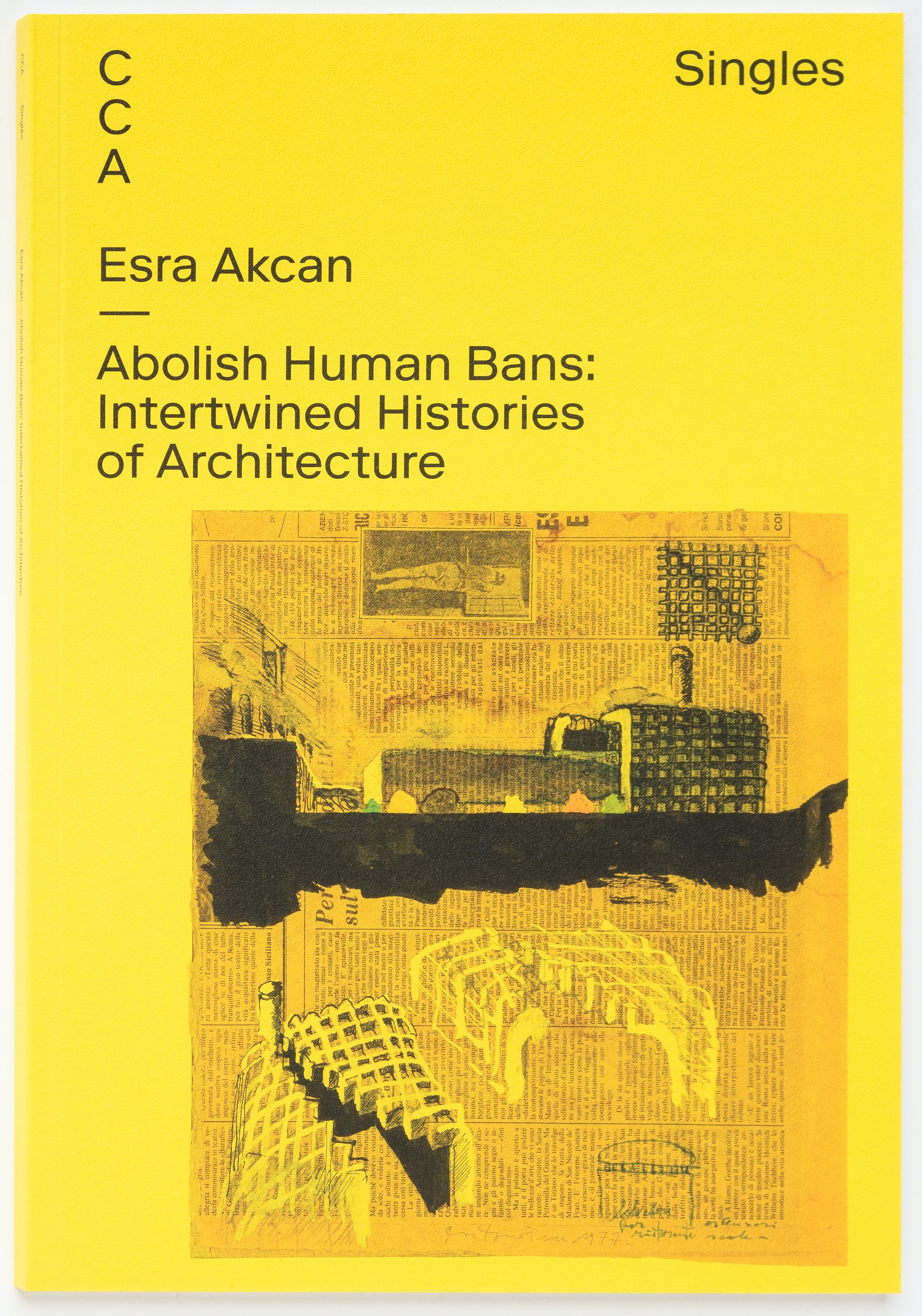
I continue the conversation about the encampments and student protests against the war and in support of Palestine, talking with Esra Akcan, Professor of Architectural Theory and Resident Director of the Institute for Comparative Modernities at Cornell University. Akcan, who completed her Ph.D. and postdoctoral degrees at Columbia, is the author of Architecture in Translation: Germany, Turkey and the Modern House (Duke University Press, 2012), Open Architecture: Migration, Citizenship and the Urban Renewal of Berlin-Kreuzberg by IBA-1984/87 (Birkhäuser/De Gruyter University Press, 2018), and Abolish Human Bans: Intertwined Histories of Architecture (CCA, 2022). Her work foregrounds the intertwined histories of Europe, West Asia and East Africa, theorizing notions of translatability, hospitality, openness.
MlP: In the last decades, the focus of architectural history and criticism has largely shifted from what Hilde Heynen called the “pastoral narrative” of modernity, going even beyond Tafuri’s critique of capitalism, in order to foster questions on the role of space and architecture in perpetuating structure of oppression and extraction. As we know, very significant scholarship has been written for example on the case of Israel and Palestine. Do you see a correlation between your research and teaching and student mobilization?
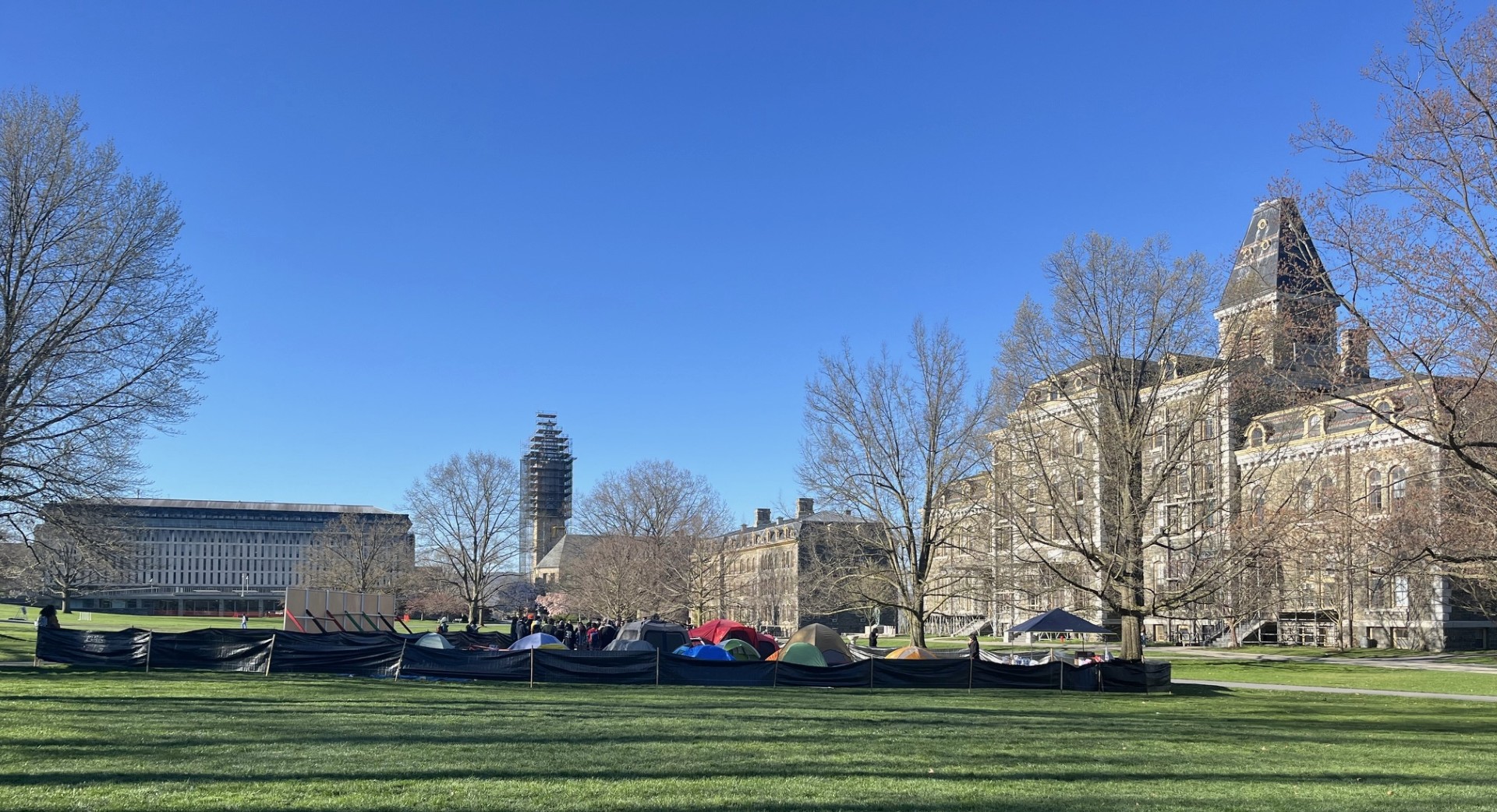
EA: I definitely see my work over the years as contributing to this shift that you are identifying. By way of an answer that combines scholarship and teaching, it may be useful to focus on the Critically Now! initiative at Cornell University–where the solidarity encampment and protests are still continuing. Critically Now! is a faculty-led platform that activates when there are timely world events that impact the built, cultural and campus environment, and which would benefit from our disciplines’ expertise. We launched the first Critically Now in Spring 2017 in the Department of Architecture and continued for about two years till Covid. We addressed current events, including the U.S. travel ban against seven countries (commonly called the Muslim ban), the racialization of immigrants, the decline of civil liberties, infrastructure projects such as the Wall on the US-Mexico border, and state interventions on architectural representation such as the executive order to have all state buildings in neoclassical style. We aimed to discuss the role of architecture and its critical potential in these matters. This first Critically Now also coincided with the 50th anniversary of the 1968 student movements, so we had a panel on Global 1968 with Cornell faculty.
MLP: Can you tell me more about the way this initiative addressed the Palestine question and the way this is related to architectural history?
EA: Critically Now! this term brought faculty and students together in learning and knowledge building through open classes and a panel. With Cornell faculty and academic experts invited to our classes from around the world, we considered the war in Israel-Palestine as a prism through which to explore globally relevant issues such as: politics of race and religion including anti-Semitism and Islamophobia, history of nation-building, Apartheid, settler colonialism, genocide, peacebuilding, the imagination of a future repair, and other topics. For instance, in one of my open classes for this initiative, we had Eyal Weizman, the founder of Forensic Architecture, as our guest, and coupled his research with books on biopower, necropower and abolishment activism, in order to discuss new architectural technologies of seeing as advanced Panopticism and war machine, which can also be employed to subversive effects.

Overall, I had 3 open classes in my seminar “Justice : History : Architecture,” which related directly to the books that I had written or are currently writing. This seminar emphasized the importance of historical knowledge in addressing the injustices of the present, while exploring architectural historiography from the viewpoint of justice. The seminar differentiated between different, sometimes competing definitions of justice, but tried to reveal their interconnectedness. The sessions were organized around concepts such as global justice, social, environmental, gender, transitional justice, racial, disciplinary, restorative and reparative justice. The course cut through recent topics in architectural history by discussing them as a matter of justice, rather than other possible frameworks such as identity politics, Anthropocene as an allegedly neutral human wrongdoing or apolitical formalism.
ML: So, in a way, what in the past was almost absent in architectural historiography, the history of lands and peoples, comes now at the forefront?
EA: One of the sessions that related most closely to the book I am currently writing was called “Mass Displacement and Nation Building”. We looked at the widespread impact of enforced mass migration during the making of modern nation-states and discussed three internationally mandated partition plans at the dawn of nation-building process in the early to mid 20th century. This session was related to the Critically Now! theme in a historical way, in the sense that it looked at the dissolution of the Ottoman Empire, which impacted the entire land including Palestine in significant ways. I gave a lecture on my forthcoming book Right to Heal where I suggest the term ‘resettler nationalism’ to come to terms with the mass compulsory population transfers during this time. Over seven million people were forcibly displaced and resettled during the empire’s dissolution, including the League of Nations mandated Exchange of Populations in 1923 between Greek-Christians and Turkish-Muslims, which now sets the border between EU and non-EU countries. This Treaty also served as a model for the UN Partition Plan for Palestine in 1947, that caused the Nakba. This process turned a multi-ethnic, multi-religious land into several homogenized etho-religiously defined nation-states, through demographic engineering, and based on the assumption of nation-state’s inevitability as an international norm. Today, five post-Ottoman countries still have limited recognition at U.N.. I write the people’s history of architecture of this resettler nationalist ideology, by tracing the experiences and living spaces of those who were subject to this dispossession, transportation and resettlement, rather than the powers that enforced it. This people’s history of architecture also reveals that the 1923 Partition, at least, was the rift between the rulers and the peoples, and not the rift between the two communities.
As other examples of enforced mass displacement during nation-building, we also read the anthology The Holocaust and the Nakba, edited by Israeli and Palestinian scholars together. What is a morally principled way of speaking about both of these violent mass displacements, without ignoring either, definitely without showing one as an excuse of the other, or without seeing this as a negotiation or compromise of sorts–because the perpetrators and victims are very clear in both? Doing this is important for the essential shared struggle of humanity against racism.
MLP: Moving beyond the past, what can we say about imagining the future?
EA: Another open class in this seminar that also related to my book was about the imagination of a future. It was called “Peacebuilding After Apartheid and State Violence” and we looked at Global South’s contribution to the discussions and mechanisms of reckoning with the historical violations and crimes. We particularly discussed architecture’s relation to the historical cases of Apartheid and enforced disappearance that gave birth to an evolving concept of transitional justice, modeled on the transitions in South Africa, Argentina, and Chile. This is a new sphere in international law that grew in the 2010s and 2020s, as a set of mechanisms that bring a society to a confrontation with injustices in its past, take accountability for past crimes, and reach justice and reconciliation through peaceful means—transitional justice has many unresolved issues as international law, but I look at how it inspires platforms that seek to change the unjust status quo through peaceful, non-violent ways.
Transitional justice or Reparations in an extended sense wants to build a holistic view of justice and peacebuilding, with platforms and methods such as truth commissions, truth trials, never again movements, state apologies, reparations, compensations, memorials, constitutional and institutional reforms. Almost all of these have architectural counterparts. I discuss architecture’s relation to right to truth by researching cities and buildings as documents of violence, and to trauma and healing by designing memorials and educational museums.

 PaesaggiSensibili