
I am delighted to be in Lisbon today for the conference “Colonial and Postcolonial Landscapes” at the splendid Calouste Gulbenkian Foundation. My paper draws on two series of colonial photographs to examine the appropriation of Libyan agricultural knowledge by Italian agronomists after the 1912 conquest, while also exposing the disciplinary role of agriculture in the repression of the Libyan resistance in 1930–33. Analyzing images from the 1913 Franchetti Mission to Tripolitania and the 1932 military “Report on the Camps,” I explore the intertwining of material and epistemic violence in Italian colonialism, while also shedding light on the value and beauty of Libya’s traditional irrigated gardens.
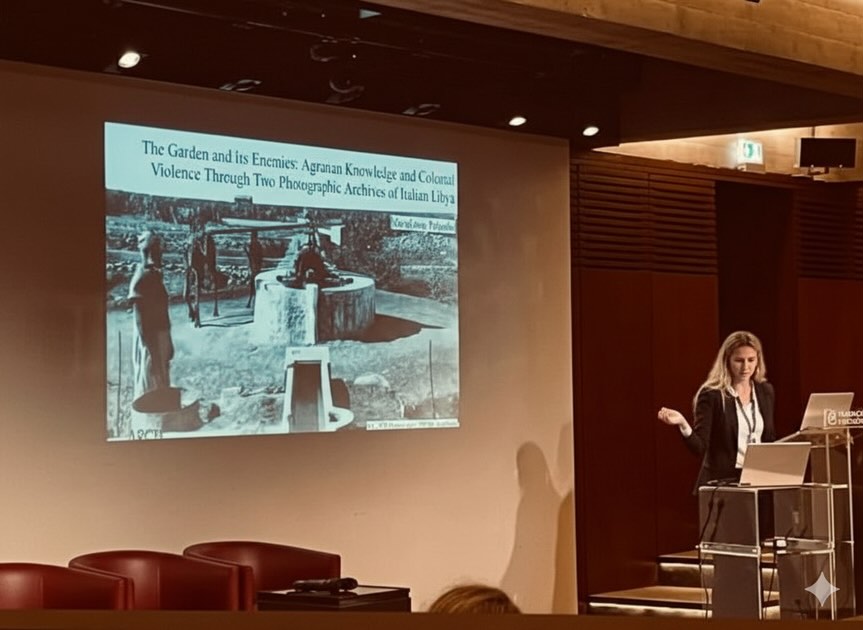
Chaired by Guillermo S. Arsuaga (Princeton University), the panel is titled “The Photographic Dialectic: Labor and Post-colonial Agency.”
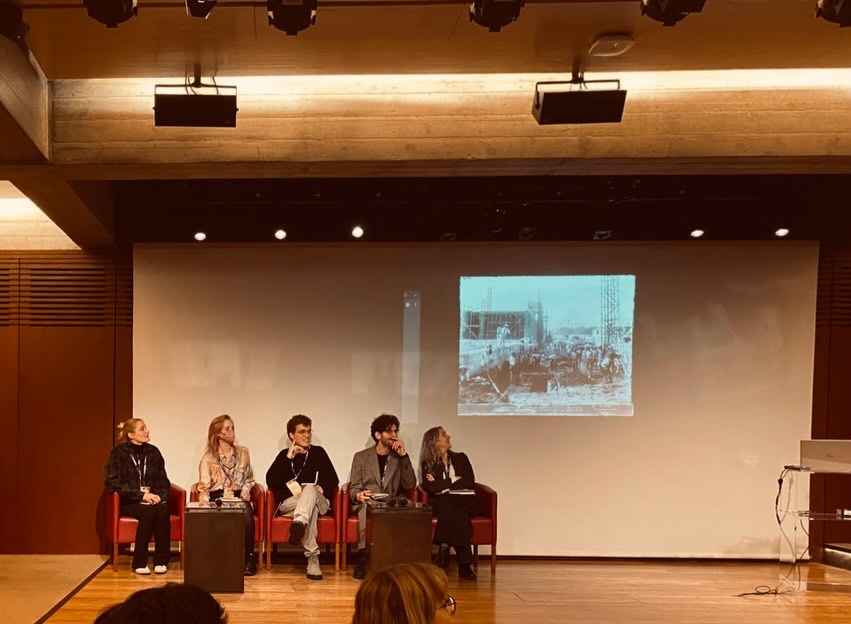
The paper appears in an edited volume based on the conference: Maria Luisa Palumbo, “The Garden and Its Enemies: Agrarian Knowledge and Colonial Violence Through Two Photographic Archives of Italian Libya,” in Architecture + Infrastructures WPS #01: Colonial and Post-Colonial Landscapes. Architecture, Cities and Labour, eds. Beatriz Serrazina and Francesca Vita (Dinâmia’CET-Iscte, 2026).


